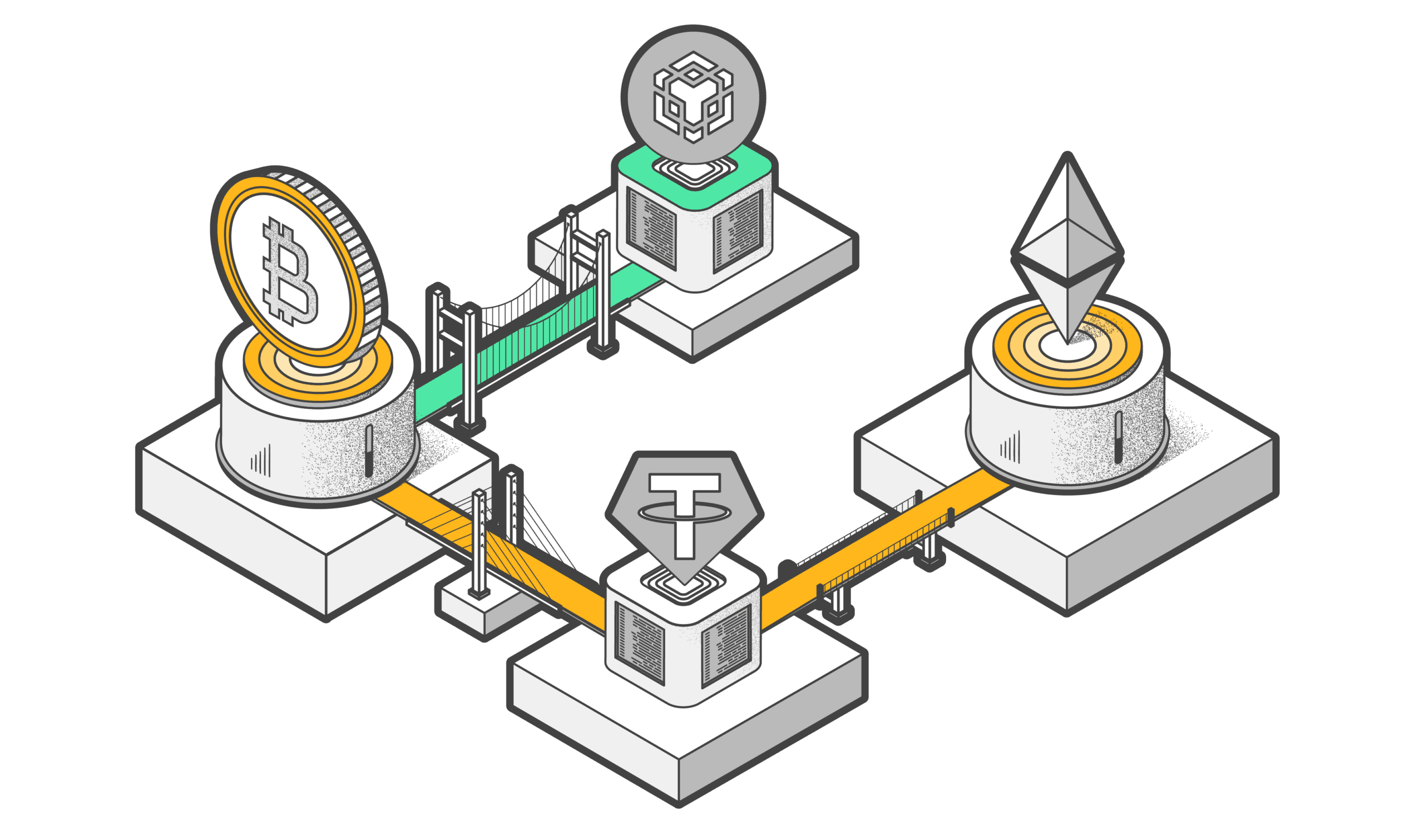
Bitcoin, Ethereum, Solana and BNB Chain all run as separate networks with their own rules and tokens. None of them can natively read or move assets on the others. Cross-chain bridge crypto tools exist to fill that gap.
This guide covers what a cross-chain bridge is, how one works, where the risks are, and when it makes sense for someone in New Zealand to use one. Short answer on that last point: less often than people think, and never with funds you cannot afford to lose to a smart contract bug.
What is a cross-chain bridge?
A cross-chain bridge is a protocol that moves assets or data between two blockchains that cannot talk to each other directly.
Some examples of the problem it solves:
- You cannot send an ERC-20 token from Ethereum straight to a Solana address.
- Bitcoin on its own cannot be used in DeFi apps that live on other chains.
A bridge sits between the two networks and handles the hand-off.
A plain-English version
Picture two countries with different currencies and banking systems. To spend your money in the other country, something has to hold your original funds and issue you an equivalent you can use there. A bridge does that job between blockchains, using smart contracts instead of banks.
Why cross-chain bridges matter in crypto
Without bridges each chain would be an island. Liquidity would stay stuck where it started, and using an app on a different network would mean selling and rebuying through an exchange.
Problems bridges solve
- Chains that cannot interoperate
- DeFi apps you cannot reach from the chain your assets are on
- Liquidity locked on one network
- Extra exchange steps, fees and tax events just to switch chains
People sometimes call this cross-chain interoperability. In practice it means you can take an asset to wherever the app or fee level you want happens to be.
How cross-chain bridges work
Knowing the mechanism helps you see where the risk sits.
Lock and mint, the most common model
- You send tokens to a bridge smart contract on chain A.
- The contract locks them.
- An equivalent “wrapped” token is minted for you on chain B.
- You use the wrapped token on chain B like any other asset.
Going back reverses it:
- The wrapped tokens are burned on chain B.
- The originals are released on chain A.
Notice what this means. The wrapped token on chain B is only worth something while the locked originals on chain A are safe. If the lock contract is drained, the wrapped tokens can lose their backing overnight.
Types of blockchain cross-chain bridges
Bridges differ mainly in who you have to trust.
1. Trusted (centralised) bridges
Run by one company or a small consortium. Usually faster and cheaper, but you are relying on the operator to hold the locked funds honestly and securely.
2. Trustless (decentralised) bridges
Governed by smart contracts and a validator set. More transparent, but more technically complex, and complexity is where bugs hide.
3. Federated bridges
Controlled by a group of known validators who must agree before funds move. A middle ground between the two above.
Which one is acceptable depends on how much you are moving and how much you trust the people or code behind it.
What people use cross-chain bridge crypto for
DeFi on cheaper chains
The most common reason. Fees on Ethereum mainnet can make small transactions pointless, so people bridge to a network with lower fees, faster confirmation or a particular lending or trading app.
Layer-2 networks
Moving ETH and tokens between Ethereum and its Layer-2 networks is technically bridging too, and it is how most people reach those cheaper networks.
NFTs and rebalancing
Some bridges move NFTs between chains. Others are used simply to shift holdings from one network to another without selling.
Risks and limitations
Bridges have been some of the most expensive targets in crypto. The Ronin and Wormhole bridges both lost hundreds of millions of US dollars to attackers in 2022. A bridge holds a large pool of locked assets in one place, which is exactly what attackers look for.
Common risks
- Bugs in the bridge’s smart contracts
- Compromised validator or operator keys
- Fake bridge websites that drain your wallet when you sign
- Delays or stuck transfers when liquidity runs short
Your own wallet security will not protect funds that are already sitting inside a bridge contract. What it does is limit how much is exposed. Keep long-term holdings in cold storage, such as a Tangem hardware wallet where the private key stays offline on the card, and only bridge the amount you actually plan to use.
Cross-chain bridge vs atomic swap
The two get mixed up, but they work differently.
Key differences
| Feature | Cross-Chain Bridge | Atomic Swap |
|---|---|---|
| Asset transfer | Wrapped or represented | Direct exchange |
| Smart contracts | Yes | Yes |
| Flexibility | High | Limited |
| DeFi compatibility | Yes | No |
An atomic swap trades your coin on one chain for someone else’s coin on another, directly. A bridge gives you a usable version of your own asset on the new chain, which is why it is the tool DeFi users reach for.
Who should use a bridge
Bridges make sense for active DeFi users, traders who need assets on a specific chain, NFT collectors and developers.
They are a poor fit if you are new to self-custody and still getting comfortable with addresses and signing, or if you are moving a small amount where the fees eat most of it. If all you want to do is hold Bitcoin or ETH for the long term, you probably do not need a bridge at all.
Safety habits when bridging
- Stick to well-established bridges that publish audits.
- Send a small test amount before the main transfer.
- Type the bridge URL yourself or use a bookmark. Do not click links from ads, DMs or search results you have not checked.
- Read what you are signing. A token approval with an unlimited amount is a common way wallets get drained.
- Wait for confirmations on both chains before assuming the transfer failed.
If you connect a hardware wallet to bridge apps through MetaMask, our guide on using Tangem with MetaMask covers the setup. For the scam side, see protecting your crypto from phishing and fake apps.
Where bridges are heading
Bridge design is moving towards native cross-chain messaging, less reliance on wrapped tokens and wider validator sets. If those changes land well, bridges should become harder to attack. For now, treat every bridge as a risk you are choosing to take.
FAQs: Cross-Chain Bridge Crypto
1. What is a cross-chain bridge in crypto?
A protocol that moves assets or data between blockchains that cannot communicate directly, usually by locking the original and issuing a wrapped version on the other chain.
2. Are cross-chain bridges safe to use?
Well-audited, established bridges are reasonably safe for moderate amounts, but they carry more risk than an ordinary transaction on one chain. Several have been hacked for very large sums.
3. Why are cross-chain bridges important?
They let liquidity and users move between networks, which is what makes multi-chain DeFi possible.
4. Do cross-chain bridges require wrapped tokens?
Most do. Some newer designs use native messaging or liquidity pools to reduce the need for them.
5. Can I lose funds using a cross-chain bridge?
Yes. A bridge exploit, a fake bridge site or a mistake with addresses can all cost you funds. Test with a small amount first.
6. Are cross-chain bridges legal in New Zealand?
Using a bridge is generally legal here. Bridging may still have tax implications, so keep records of each transfer and check our notes on crypto tax in NZ or ask your accountant.
Before you bridge anything
Decide how much you actually need on the other chain, bridge that, and leave the rest where it is. If your long-term holdings are still on an exchange, sort that out first: buy genuine Tangem wallets from Tangem NZ, an authorised New Zealand seller shipping from Auckland.