Hardware wallets used to mean a USB stick with a tiny screen. Then came cards. Now there’s a ring, and the question we get asked most about it is a simple one: what is the Tangem Ring price in NZ, and is it worth paying for in 2026?
This guide gives the straight numbers, what you get for them, who the ring suits, and who would be better off with a card set.
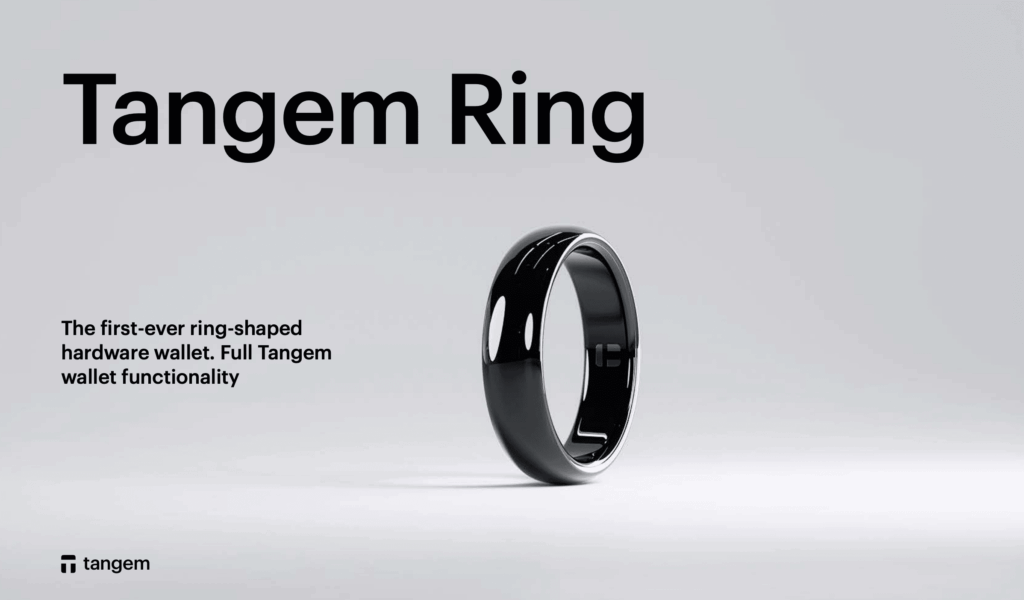
What the Tangem Ring is
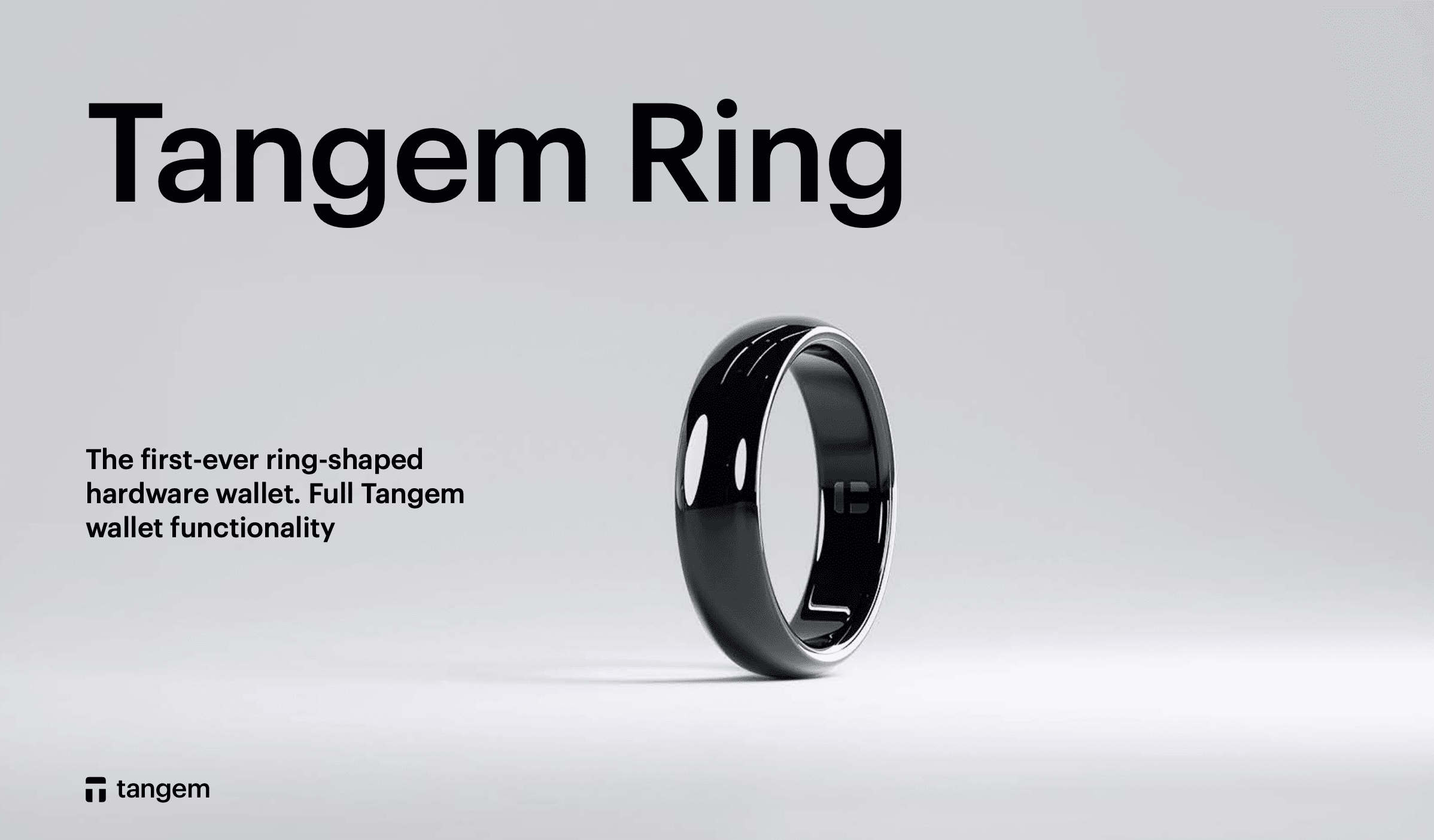
The Tangem Ring is a wearable cold wallet. A certified secure element chip sits inside a zirconia ceramic ring, and your private keys are generated and stored on that chip. There are no cables, batteries or screens. It talks to the Tangem app on your phone over NFC, the same short-range radio your bank card uses at a payment terminal.
The key point: your keys never leave the ring. The app builds a transaction, you tap the ring to sign it, and only the signature goes out.
Tangem Ring price in NZ for 2026
The Tangem Ring sells for NZ$320 including GST at tangem.nz. That price is for the full set: the ring plus two backup cards, all sharing the same wallet. There are no subscriptions or ongoing fees. The Tangem app is free.
For comparison, a 3-card Tangem set is NZ$139.99 and a 2-card set is NZ$109.99. The ring sits at the premium end, and most of the difference is the ring itself: ceramic, sized to your finger, and built to be worn every day.
Buying from a local seller means no overseas shipping delays, no surprise import charges at the door, and a warranty you can actually claim on in New Zealand.
What drives the cost
The secure element
The ring uses the same class of certified chip (EAL6+) found in banking cards and passports. That hardware costs more than a general-purpose microcontroller, and it’s the reason the keys can’t be read out of the device.
The wearable format
A card lives in a drawer. A ring lives on your hand, so it has to be waterproof (IP69K), scratch-resistant and comfortable all day. Zirconia ceramic does that, and it isn’t cheap to machine.
The cold wallet design
No battery, no internet connection, NFC only. Fewer parts means fewer things to attack and fewer things to break. The firmware is fixed at manufacture and can’t be updated, which removes a whole category of risk.
What you’re actually paying for
- Offline key storage, with no cloud and no servers involved
- Physical ownership of your private keys
- Nothing to charge or maintain
- A wallet that’s always with you and doesn’t look like one
- Two backup cards and a 25-year warranty
If you’re holding crypto as a long-term position, the one-off cost is small next to what it protects.
Is it a true cold wallet?
Yes. Private keys are generated and stored offline, there’s no USB or Bluetooth, and the ring never touches the internet. Transactions are signed inside the ring and broadcast by the app. Your phone only ever sees the signed result.
Who the ring suits
It makes the most sense for long-term holders of Bitcoin, Ethereum and the major coins, for people who want their wallet on them without carrying a device, and for anyone who dislikes bulky hardware. It is also a good fit if you want storage that doesn’t advertise itself.
It’s a weaker fit for active day traders, for people who want a screen and buttons on the device itself, and for anyone who simply won’t wear a ring. In those cases a card set does the same job for less.
Pros and cons
For: true cold storage, wearable and discreet, no cables or batteries, a simple app, and the same audited chip as the cards.
Against: a higher upfront cost than a card set, you need an NFC-capable phone, and sizing matters (see our ring size guide before ordering). It isn’t built for frequent trading.
Tangem Ring vs USB hardware wallets
| Feature | Tangem Ring | USB Hardware Wallet |
|---|---|---|
| Connectivity | NFC only | USB / Bluetooth |
| Battery | None | Often required |
| Portability | Wearable | Pocket device |
| Backup | Two cards, same key | Written seed phrase |
| Daily convenience | High | Medium |
If you value simplicity over a device screen, the ring usually wins. If you want to verify every transaction on the device itself, a screened wallet is the better tool.
Is the Tangem Ring worth buying in 2026?
At NZ$320 the ring is a premium product, and we’d rather say that plainly than pretend otherwise. The question is what you’re protecting. If you hold crypto worth many times the price of the ring and you want it off exchanges, the cost is justified. If you’re starting with a few hundred dollars, buy a 2-card set first and upgrade later.
Where to buy the Tangem Ring in New Zealand
Buy from an authorised seller: tangem.nz is Tangem’s authorised New Zealand retailer, with stock in Auckland and local warranty support. Avoid unofficial overseas sellers and second-hand listings. A pre-activated device is a device someone else may hold the key to.
Other NZ sites from the same team
FAQs
What is the Tangem Ring price in NZ in 2026?
NZ$320 including GST for the ring and two backup cards, from tangem.nz.
Is the Tangem Ring safer than a USB hardware wallet?
It has a smaller attack surface: no USB, Bluetooth, battery or screen, and fixed firmware. Whether that makes it “safer” for you depends on whether you want on-device transaction verification, which the ring doesn’t have.
Can I use the Tangem Ring as my main cold wallet?
Yes. Plenty of our customers do, with the two cards kept in separate places as backups.
Does the Tangem Ring need internet access?
No. The ring stays offline. Only the app on your phone needs a connection to broadcast transactions and show balances.
Is it suitable for beginners?
Yes. Setup takes a few minutes and there’s no seed phrase to write down. The main beginner mistake is ordering the wrong size, so measure first.
What happens if I lose my Tangem Ring?
Your crypto is still on the blockchain, and either of the two backup cards from the set opens the same wallet. See what happens if you lose your Tangem Ring for the full process.
Is the Tangem Ring legal in New Zealand?
Yes. There are no restrictions on owning or using hardware wallets in NZ. Tax on your crypto is a separate matter; see our NZ crypto tax guide.